


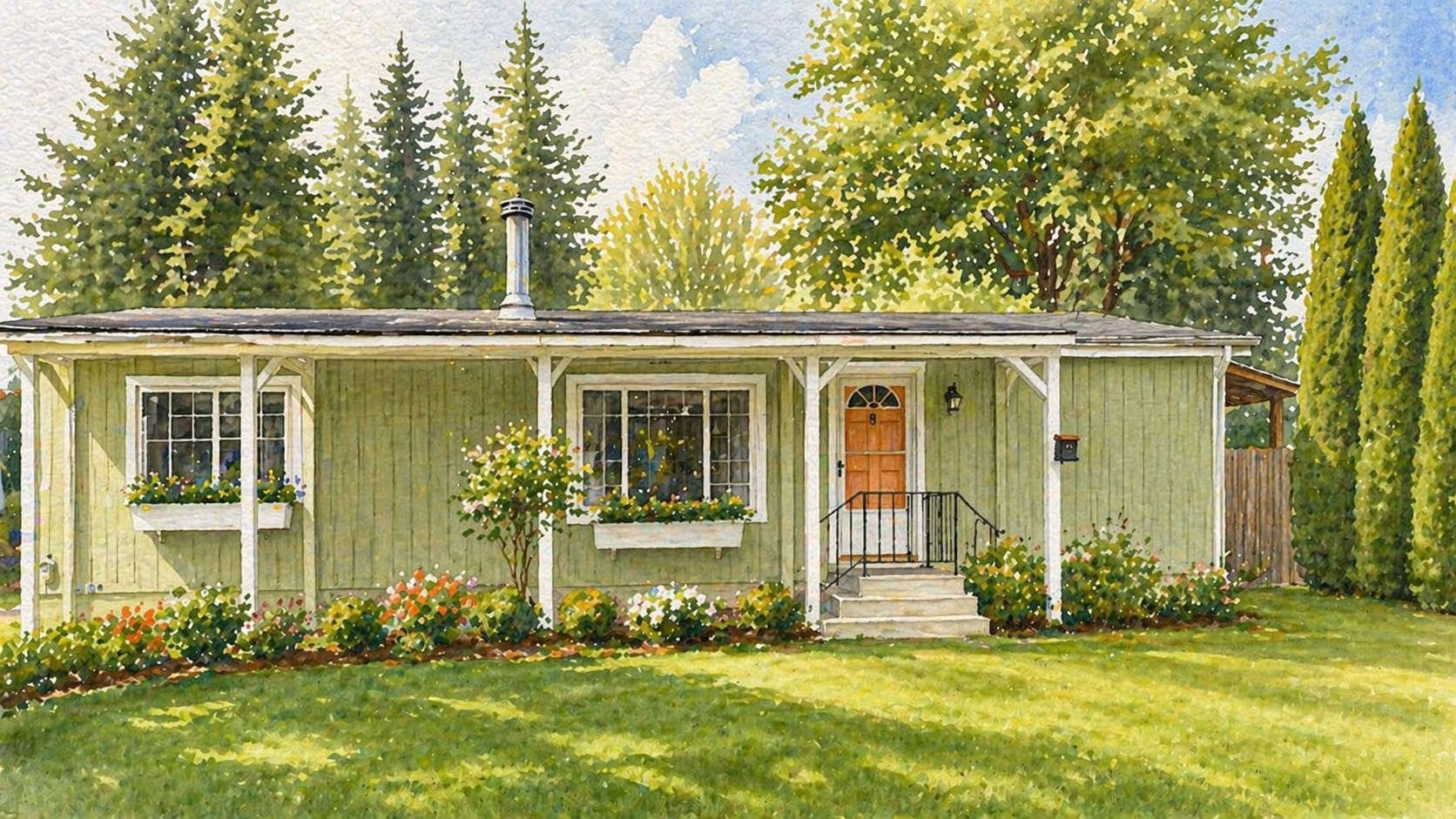
I’m lying under the eaves in my upstairs bedroom listening to the wind howl outside my 1880 brick Victorian farmhouse. Sleet clatters against the windows and the old house creaks and shudders, but I’m warm beneath my down comforter, scrolling Redfin on my phone looking at houses 2,000 miles away in Washington state.
Why not move? What’s stopping you?
My mom died suddenly just over a year ago. One moment, she was a vibrant, 65-year-old smartass with a sailor’s mouth and a nicotine addiction she tried to hide from her concerned family. The next, an ambulance whisked her to the hospital where, 24 hours later, a combination of heart disease and the flu took her life.
Just weeks before her death, I’d been sitting at Mom’s kitchen table. We were talking about how life often forced us to change directions, rethinking and reshaping our dreams.
“I have this wild idea about moving to the Pacific Northwest,” I confessed. “Ever since I visited, I keep thinking it’s where I belong.”
I expected Mom to resist . She liked being surrounded by family. But instead she chirped, “You should go!”
I laughed. “Are you trying to get rid of me?”
“Yes,” she answered. (I warned you about the smartass thing.) When I rolled my eyes, she said, “You deserve to be happy. And I’d have a new place to visit!”
My mom had seen me struggle through an abusive marriage. Now that I’ve separated from my husband, I realize she’s willing to sacrifice her need to keep me close for my happiness.
But still, I stay. Until Mom dies.
A year after her death, I start formulating a plan in my cold, creaky house tucked under the eaves. I head to apartment websites and Craigslist and look at rental prices. They’re high, but I think I can manage. I will manage.
Nothing is holding me back. Mom is gone, my marriage is over, my kids are grown, and I’m free to go.
My strategy begins to take shape. I will allow a month between my daughter’s high school graduation and our departure west. I choose a moving date — June 28.
When I tell the kids my plans, they’re already prepared. They know I’ve been fantasizing about the Pacific Northwest, and they‘re excited to go with me.
I sell nearly all of our belongings. Then, at the end of June, with just $2,800 in my bank account and a van loaded floor to ceiling with what remains of my life in the Upper Midwest, I set sail.
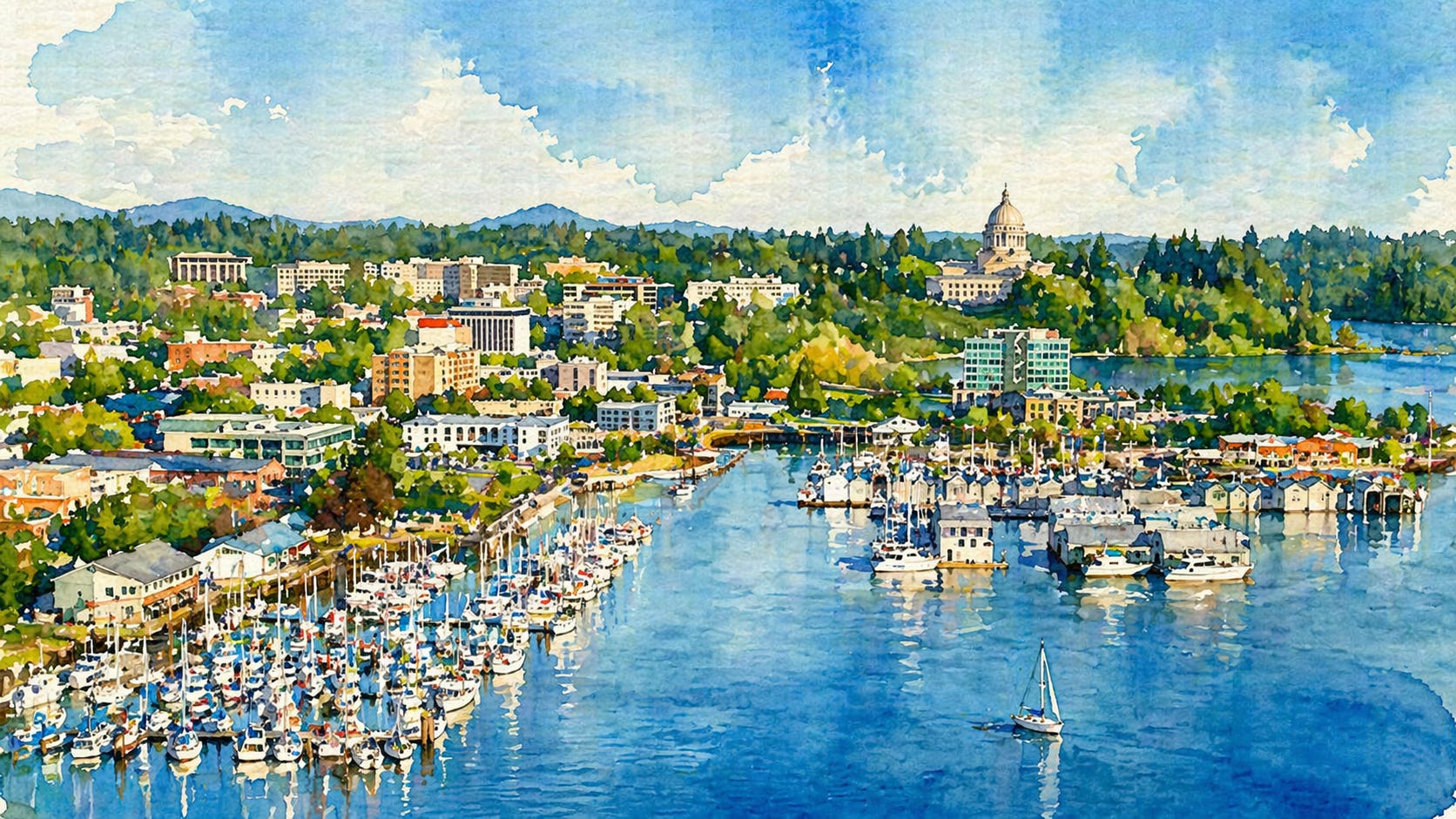
I arrive in Washington on schedule. The kids and I move into a trashy but affordable apartment complex. Our compulsively weed-smoking neighbors, whose front porch smoking habits cause skunky fumes to drift through our window, refer to the place as Ghetto Glen.
It’s perfect. For now.
On clear days, when I leave the complex driveway, I see the Olympic Mountains rising in the western distance. Snow-capped Mount Rainier, part of the Cascade range, looms on the eastern horizon, its base only about an hour away. On clear, sunny days, the locals cheerfully proclaim, “The mountain is out!”
I’m content exploring Washington during our first summer there, intoxicated with freedom. I’ve left my marriage and made a life for myself and my kids in a whole new place. It feels huge, like something I hadn’t known I had the strength or conviction to accomplish.
And yet, here I am. I often stop to look around and think, Mom would have loved this place. She always did enjoy an adventure, something her life of service to my dad’s whims hadn’t afforded her often.

When I join a community chorus in September, I meet my first Washington friend. Dena is 65, the same age my mom was when she died. She’s an eclectic, creative, quirky dancer and performance artist who moved to town the same day I did.
One day, we’re hanging out at her quaint little house downtown. It’s decorated lavishly with paintings by her husband, a well-known Northwest artist who had been significantly older than her and died years earlier. Dena is also an avid collector of antiques. I look around her small but lovely (and loved) house and proclaim something I’ve only allowed myself to think so far:
“I’m going to have a house in five years.”
Dena marvels that I would have a five-year plan when she can’t even seem to manage a five-minute one.
But I reaffirm my position is strong: “It’s all I ever wanted!”
For most of my adult life, I’ve raised my kids in apartments, duplexes, and rented houses while scanning real estate apps obsessively, dreaming of a space to call my own, where I can decorate, garden, have dogs, and do whatever I want.
We live in Ghetto Glen for a year before I get a small promotion. We then move to a nicer, newer apartment complex where there’s no pungent smoke wafting through our window daily.
A year and a half later, my son has gone back to the Midwest to finish college there, so it’s just my daughter and me. I find a cute little 720-square-foot rental house in a quiet neighborhood. There, I’ll be able to hang up a bird feeder and (finally) plant some plants.
But the house is still not truly mine.
The Redfin-scrolling addiction continues. I find myself sending “perfect” houses to my daughter, who’s now fully onboard with my homeownership dream.
I’ve never had a real mortgage. Before I moved to Washington, I didn’t have so much as a credit card or an auto loan in my name. My ex-husband’s chaotic mental health issues and frequent job changes ensured that our credit score (joint, because we’d lived in a marital property state) was always well south of 600.
But I’ve since financed a car, secured a low-interest credit card or two, and seen a doctor and a dentist — all things my shaky finances and a dysfunctional marriage prevented me from doing in the past. My credit score is now in the “any better and you’re just showing off” range.
But I still don’t make much income compared to the cost of living in the Pacific Northwest. And I’ve barely been able to save, so my would-be downpayment is laughably small.
“Sarah and her husband just got a loan approved for a house.”
Five years have come and gone. It’s late 2021, and I’m no closer to getting a house thanks to the crazy real estate market the pandemic wrought. Housing inventory is low, demand is high, and prices have far outstripped value.
Sarah is my daughter’s coworker. They work at a piercing studio downtown, next to a tattoo studio, where you’re as likely to meet an unhoused person stripping casually on the sidewalk as a wide-eyed tourist taking it all in.
Every place has problems, but ours are often on full display. And yet, I love it … the beauty and the grunge, the hopefulness and the heartache.
And still, I want to put down roots.
What could it hurt trying? The worst they can say is “no.”
But “no” feels like a judgment: Not good enough. I’ve been wrestling with variations on that theme my whole life.
I ponder this for a moment. My Redfin stalking has revealed that the real estate market is starting to cool. I’ve seen a smattering of houses I might be able to afford. But it still means I’ll be competing with many other buyers who have the same idea.
I’m scared. This is too big. I’ve never done anything this big befo —
“Mom,” the kid says, interrupting my defeatist train of thought by reading my mind, “You moved us out here with a van, no furniture, and hardly any money. You can do this.”
A few weeks later, I find myself with a mortgage loan approval letter and a realtor.
I’ve already been drastically outbid on one house, and I’ve seen a few others that weren’t the right fit at any price. Sometimes, a house just feels wrong.
But the one I’m looking at now on the multiple listing service (MLS) has just come on the market. And for reasons I can’t explain, it feels right.
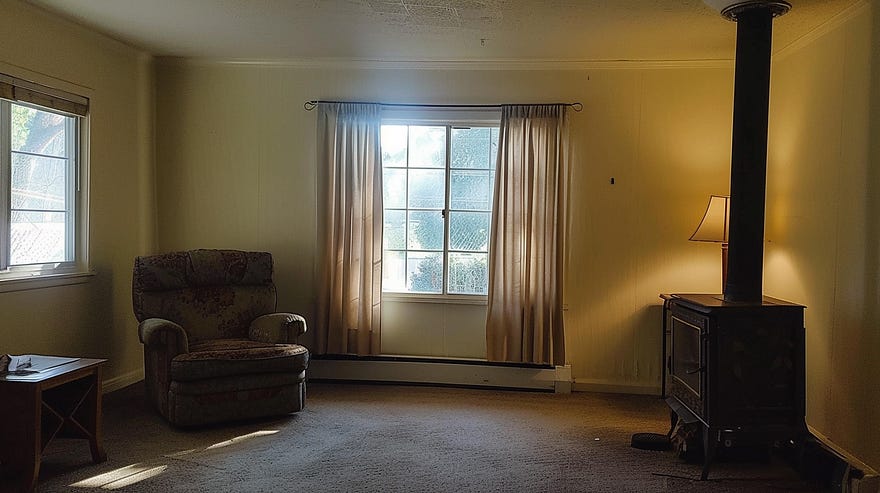
The pictures are awful. They look as though the realtor hastily snapped them with a cell phone. The house itself is a double-wide manufactured home built in the late 80s. It’s on its own land, almost an acre, out in the countryside but close to amenities.
Manufactured homes seem to fare much better here on the West Coast than they did back in the snowy Upper Midwest, so I’m not scared off by the fact that it’s not a traditional stick-built home. I know manufactured homes hold their value well if they’re not in a mobile home park.
I text my realtor, Juliann, and we meet at the house that evening.
It’s December, so it’s appropriately rainy, gloomy, and muddy. We’re stumbling around in the inky blackness, using our phones as flashlights.
Juliann finally opens the lock box, and I step inside.
The house is warm — the furnace still works fine — and smells faintly of emptiness and dogs. It’s been sitting vacant since October when the owner had accepted a different offer. That deal fell through, so the owner was desperate to get the home sold. The scuttlebutt was that she moved to Texas to escape the “tyranny” of a progressive state that required mandatory vaccinations for healthcare workers.
I walk through the house. I see every flaw. The place hasn’t been deep cleaned in … ever. It desperately needs new paint. The carpet is filthy and stained, which explains the dog smell.
But there’s a huge primary bedroom with an en suite bath and a walk-in closet, plus two smaller bedrooms and a guest bath on the opposite side of the split floor plan. Cosmetically, it needs help, but structurally, the house seems in good shape.
“I want it!” I proclaim. I’ve never been more certain. Despite the dog smell, the dirty walls, and the tragic carpet, this place feels like home.
Juliann urges me to look at the rest of the property, so we stumble around in the sloppy, wet darkness and find a huge storage shed and a rickety outbuilding that once served as a kennel. (I would later learn that the owner had raised and shown Westminster-winning Australian shepherds.)
“This is crazy,” Juliann says, marveling at the outbuildings and the expanse of fenced land we can barely see through the gloom. “It’s a unique property.” She tells me the owner’s agent doesn’t know what he has, and that she would have listed the home for at least $60,000 more in the current market.
One Christmas Eve day, I make a full-price offer and cross my fingers that the holidays have put off buyers and there are no competing offers. I’m also counting on the owner’s desperation.
A few days after Christmas, my offer is accepted, and I’m under contract.
For myriad reasons, it takes over three months, but on the last day of March 2022, I sign papers and became a homeowner. I dub my little corner of the world—with its newly redone luxury vinyl plank floors, fresh paint, and new roof—Almost Acre.
My five-year plan took seven, but I’ve finally put down roots in a place I love. It all started with $2,000, a van full of stuff, and a dream, but now I have a mortgage, more responsibilities than I sometimes feel able to manage, and a huge yard that will forever be a work in progress.
And I’ve never been more content.
Yes, I deserve to be happy, Mom.
Mission accomplished.
Epilogue
When I wrote this story in the spring of 2024, I’d been recently laid off from my job as an editorial manager for a big corporation with thousands of employees. I figured some other big corporation with thousands of employees would want me and that I’d be able to bank most of my severance and sail on happily.
But that wasn’t the reality.
I sent out hundreds of applications and got zero nibbles. Just a couple of phone interviews with recruiters that inevitably went nowhere. At almost-sixty, I was no longer employable by The Big Guys. (Which, if I’m honest, is a relief. And yet.)
So I decided my home was in state government. After all, I live in a capital city. But although I got interviews, the story was the same: “So sorry. We like you a lot, but we need someone with public sector experience.”
I became the weekend Zoom technician for the local Quaker community, thanks to a choir friend who connected me with the very-very part-time work. (There’s a story here that I’ll save for another time. And it’s a lovely one.) That evolved to a very part-time office manager job, which I love, but which also usually earns me just slightly less than my mortgage payment every month.
In short: I’m doing everything I can (including writing this Substack!) to keep my beloved house. And not only to keep it, but to keep it maintained. Life keeps wanting me to prove that I can accomplish hard things. And I can’t hide it anymore: I’m getting tired.
If you’re a paid subscriber to I’ll go first…, thank you! You’re part of the financial solution. And if you’re a subscriber or follower who reads for free, thank you! You’re part of the beautiful cycle of artistic encouragement. All of you keep me going!