

I’m on the Friday morning check-in Zoom call with my colleagues. Both my supervisor and our social media manager look weary as we wait for our department manager, who’s five minutes late. We’re all beyond ready for the weekend.
Then a chime rings and our superior (in title only, I assure you) enters the video conference, followed by an unfamiliar face. The New Guy is introduced as So-and-so from Human Resources.
Well, shit.
The three of us — all women, all hardworking — sit in numb (read: anxious and vaguely pissed off) silence.
The board has come to the difficult conclusion … it’s a business decision … severance package will be sent to your personal email … your access will be terminated after this call …

When the severance and unemployment runs dry
At first, I was relieved. Finally, an opportunity to find a job I could actually vibe with instead of living in a corporate hellscape!
I went about applying for jobs. I was picky when I started out. I wanted my next gig to be more meaningful. I was looking for something I felt connected to, something purposeful.
After three months and hundreds of applications with zero nibbles, I cast a broader net. I networked. I tailored each and every application to the role I was applying for. I made finding a job my full-time occupation.
Nothing. Zip. Zero. Nada.
I hit online forums like Reddit for tips on navigating the current job market. I learned that I was far from alone. People in marketing and tech seemed to be facing the same uphill climb. Hundreds of apps, dozens of “thanks, but no” responses, plenty of ghosting, almost no interviews offered.
After six months of daily job hunting with only two interviews to show for it, my unemployment benefits ran out. What was left of my severance and savings would follow soon if I didn’t get a job.
But … I had a fish on the line. All I had to do was set the hook. The hiring manager told me she’d have “good news” for me as soon as she cleared “a few things with HR.”
Finally, I would be employed!
Until, a week into waiting for that “good news”, I got an email saying:
“Thank you so much for your time and energy. We’re putting a pause on hiring for this position until further notice.”
And that’s when my mental health went straight down the proverbial shitter.
Lots of tears and one GoFundMe later …
I’m always the strong one. The fighter. The person you turn to in a crisis who says, “Okay, here’s how this is gonna go down …”
I’m a member of Generation X, for fuck’s sake. We were raised to be stubbornly independent and self-sufficient. (We also swear a lot, I guess, but that’s not important right now.)
But I’ll fully admit that, faced with the prospect of having almost no money left on which to live, let alone enough income to pay my bills and the mortgage on my simple little home — a place I love I fought a long, hard battle to get — I came apart.
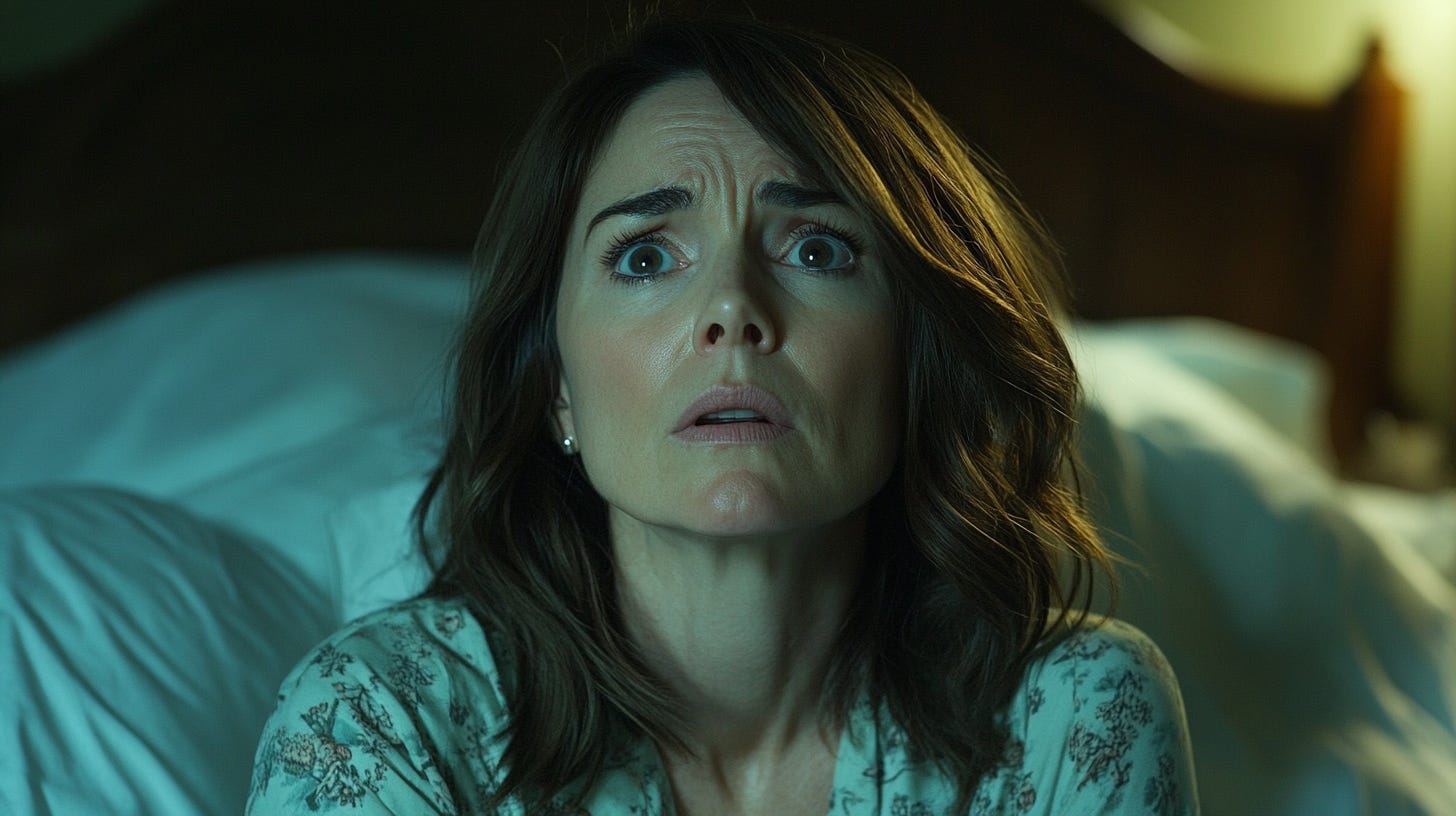
First, I cried. I cried a lot. I couldn’t eat or sleep. My heart fluttered constantly and my brain was soup. I was too panicked to think straight.
But I finally pulled it together enough to ask for help. I started a GoFundMe. Then I sent a plea out to all the people I know and love in my community.
And the most unexpected thing happened. Everyone rallied around me. Out of sheer desperation, I had crowd sourced my survival. Donations big and small came in from family, friends, members of the musical communities I belong to, and even from absolute strangers.
At least for a few more months, thanks to help from others, I knew I would be okay.
How a TV show helped lead me out of the dark
After receiving help, I moved out of panic mode. My shoulders, which I’d been holding up around my ears, finally relaxed. I could breathe again. Most of the time, I could even sleep.
I wasn’t out of the woods — far from it — but I could see a path. I hung out a freelancing shingle. I relaunched my blog to offer writing coaching services.
And then I allowed myself to relax and watch some TV.
I’d heard good things about the BBC show “Call the Midwife,” so I searched it out on Netflix. With the exception of a show or two that I’ve been fairly devoted to over the years, TV is usually background noise for me. I wouldn’t call myself much of a TV watcher. But this show has me hooked.

“Call the Midwife” is set in Poplar, a district of London’s East End, in the 50s and 60s. The area is impoverished, filled with working class people surviving amidst post-war rubble left behind from the Nazi Blitz. Life is rough. Men work themselves to exhaustion on the docks where only unions prevent them from being hopelessly exploited. Women pick up everything else — cooking, washing, cleaning, going to market, and wrangling herds of children.
Although they live with poverty, domestic violence, squabbles with neighbors, substance addiction, prostitution, and unwanted pregnancies terminated by back alley abortionists (who sometimes also end up terminating the lives of the desperate women seeking their services), they have a strong community.
The people of Poplar have seen it all, and they have one another’s backs.
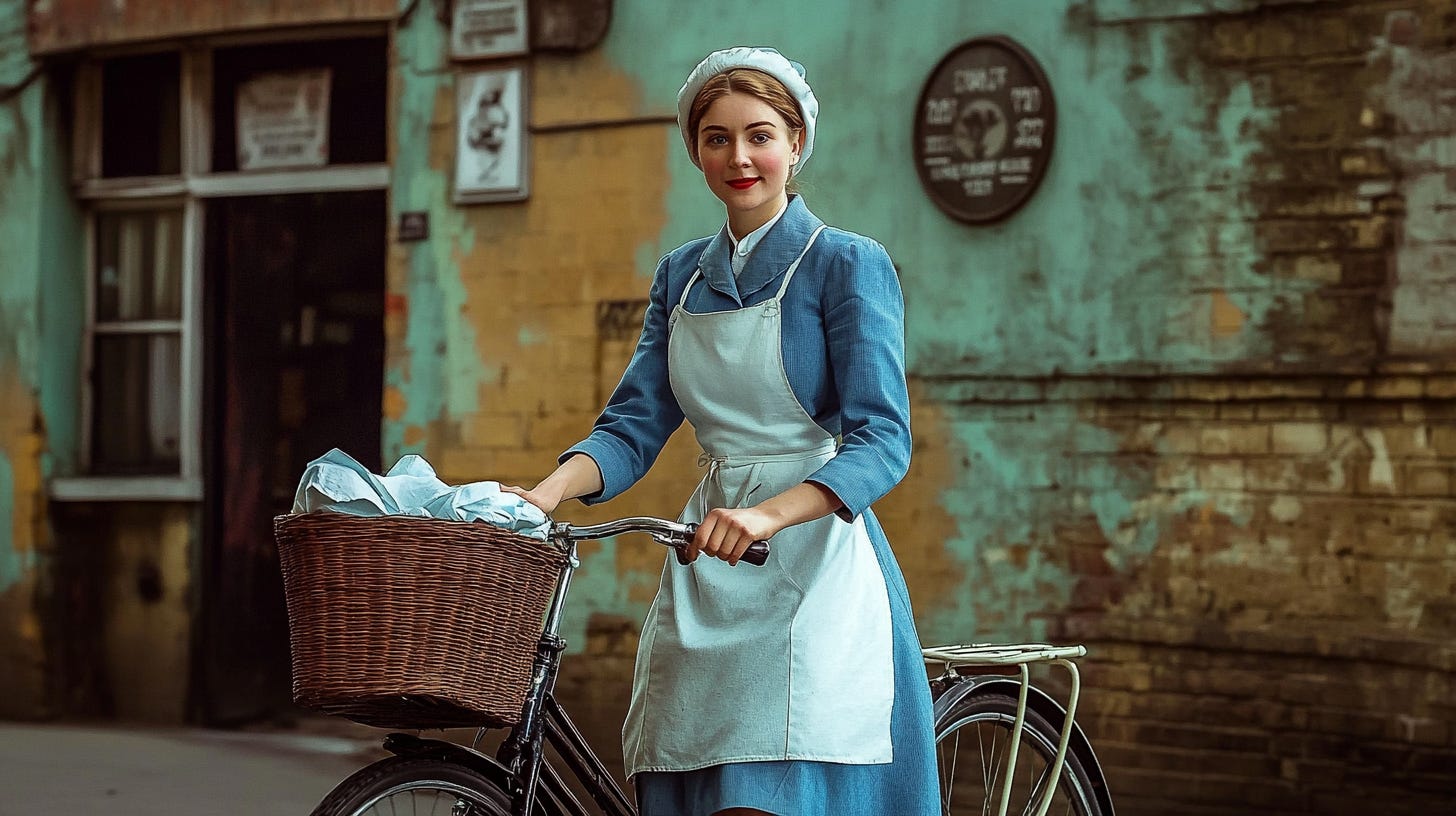
And then there’s the midwives themselves. Some are nuns, the sisters of Nonnatus House, an Anglican order of midwives dedicated to the patron saint of midwifery, Saint Raymond Nonnatus. Others are district midwifes, skilled nurses who live and work alongside the equally skilled nuns. They ride bikes around the East End in their uniforms (or habits, for the nuns), delivering supplies, checking in on expectant and postnatal mothers, and, of course, delivering babies.
Poplar is filled with people at risk of falling through the cracks. People in survival mode who may not know where their next rent payment or meal is coming from. People in far rougher circumstances than I am who are just trying to stay alive.
And the midwives, as well as the deeply dedicated Doctor Turner and his wife, Shelagh, are the glue that helps seal up the cracks, bit by bit, so fewer people slip between them and get lost. Add to this the social safety net of England’s National Health Service (NHS) and suddenly you have a perfect recipe for providing support to those most in need of it.
Of course, there are challenges, and the NHS is far from perfect. But the pervasive theme in Call the Midwife is that yes, people do care, and help is never far away. These days, we have to ask for it, just as I did with my GoFundMe and my outreach to colleagues, friends, and family asking for job leads and ideas.
Watching this show and seeing how people are capable of lifting one another up has pulled me out of my own despair. Because although “Call the Midwife” is about a different place and time, the idea of community hasn’t left us.
We see community in big ways, like when people rally around others in the wake of a natural disaster. We see it in more personal ways, like when someone endures a loss and their people gather to support them, expecting nothing in return. We see it from complete strangers who hold open doors, share a kind word or a smile, or pick up something we’ve dropped and hand it back to us. It’s alive in the unhoused person who finds a lost wallet and turns it in without taking a dime or touching a credit card.
I’ve just started reading “Call the Midwife,” the first book in Jennifer Worth’s memoir series, on which the BBC show is based. I recommend it if for anyone who wants to gain even more perspective on the 1950s and 60s struggles working class people faced in London’s East End.
Meanwhile, this quote embodies everything that drew me to the show, and helped me begin healing and moving forward instead of surrendering to fear and the shame of being unable to find work.
“Shame is born in public and lived out secretly. What is not seen cannot be scrubbed away. But so much can be made bearable by love, by cherishing what is, and not condemning fault or flaw. By never locking doors, by keeping hearts open, and holding each other forever in the light.”
— Call the Midwife