


Jennifer was a meek girl with oily mouse-brown hair who sat in the back row of my second grade class trying to be invisible. She and her little brother, Timothy, wore the same tattered, too-small clothes to school every day. When spoken to, Jennifer and Timothy ducked their heads, staring at the floor as they murmured an answer.
We kids whispered and giggled, making cruel jokes about them. There’s a vicious tribalism that develops in children. Without intervention, it easily continues into adulthood, where it’s far more dangerous. None of us want to be cast out, so we adopt behaviors we know are wrong and slowly begin to normalize them.
I’m ashamed to admit that in my quest to fit in, to not become a target, I didn’t stand up against the elementary-school hazing. As long as Jennifer and Timothy weren’t within earshot, it wasn’t hurting them. right? At least being complicit wasn’t as bad as teasing them ruthlessly to their faces like some kids did.
Those haunted faces.
After it happened, I would sit alone and imagine that I’d been a better person, that I’d befriended Jennifer and tried to learn why she seemed so sad, so thin, so ragged. I imagined that I’d been kind to her, and that my kindness had somehow prevented the tragedy that took her life.
There was no morning pandemonium. We knew something had gone horribly wrong.
One morning, Mrs. Elliot came into the classroom, sank into the chair behind her desk, and ran a hand through her short, salt-and-pepper hair. She breathed a hitching sigh, thin and breakable. We sat quietly, tensely, waiting. There was no morning pandemonium. We knew something had gone horribly wrong.
Eventually, Mrs. Elliot stood. “I have some news about Jennifer,” she said.
We waited. We did not fidget.
“There was a fire at the motel where Jennifer and Timothy live.” She paused, breathed in, and then continued in a voice not much louder than a whisper. “They didn’t get out. Jennifer and Timothy are gone.”
We sat in uncertain silence. Didn’t get out? Gone? What did that mean?
“They died?” a small voice from the back of the classroom asked.
“Yes, they died. I’m sorry,” Mrs. Elliot said. She collapsed into her chair again and rested her face in her hands. We watched her shoulders hitch, but she made no sound.
I thought about those words: “They died.”
I was accustomed, even at that age, to euphemisms like “passed away.” Auntie Ruthie “passed away” when I was young, and even then the language seemed intended to soften the loss, to diminish the profoundness of it. “Passed away” was gentle, a letting go, a slide into a different reality.
But “died” had a different impact. As I sat in the silent horror that followed Mrs. Elliot’s proclamation, I felt the word like a blow to the abdomen. As words go, “died” didn’t pull its punches.
After a few long minutes, Mrs. Elliot stood, smoothed her blouse with her hands, and said, “The fire chief will be here tomorrow afternoon to give a fire safety assembly. I want you all to pay very close attention.” She stepped out from behind her desk, ready to take charge again. “Now, let’s take out our math books.”
At the assembly, we learned that Jennifer and Timothy had made it safely out of the building at first. But they got separated from their mother, the only parent they lived with.
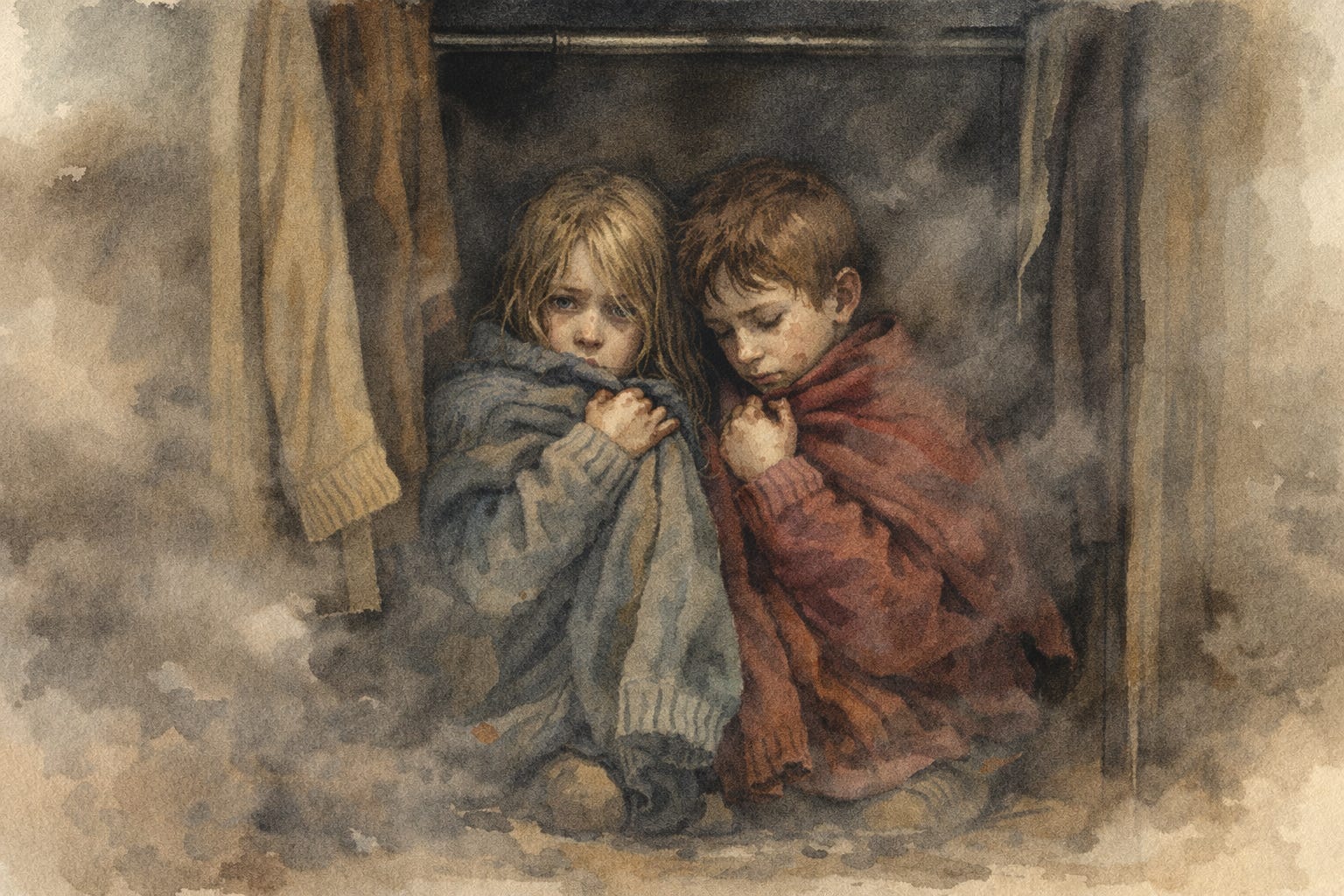
Who knows what they were thinking? They were confused, frightened, and cold standing outside in their pajamas in the middle of a Wisconsin winter. They’d gone back into the building despite the smoke and blaring fire alarm. They took shelter in their motel room closet, covering themselves with their mother’s sweaters. Although the closet, remarkably, remained standing, the children died of smoke inhalation.
A few days after the fire, Mom drove us past the burned out motel. At the time, I thought she was trying to scare us, to teach us that we shouldn’t mess with fire and always always leave a burning building.
But when I became a parent, I understood what moved my mom to visit the tragic scene.
Even when our children are perfectly safe from harm, the ice of possibility courses through our veins, stopping our breath and our hearts for just a moment.
A parent’s life is filled with imagined worst case scenarios. When a sled flies out onto a frozen lake, we imagine our child falling through, sliding under the ice, disappearing into the frigid dark. If our child slips while trying to balance on a curb, we see them falling into traffic and struck by a car. Even when those things don’t happen and our children are perfectly safe from harm, the ice of possibility courses through our veins, stopping our breath and our hearts for just a moment.
My mom needed to see for herself what could have happened to us. She had to reassure herself that it had not.
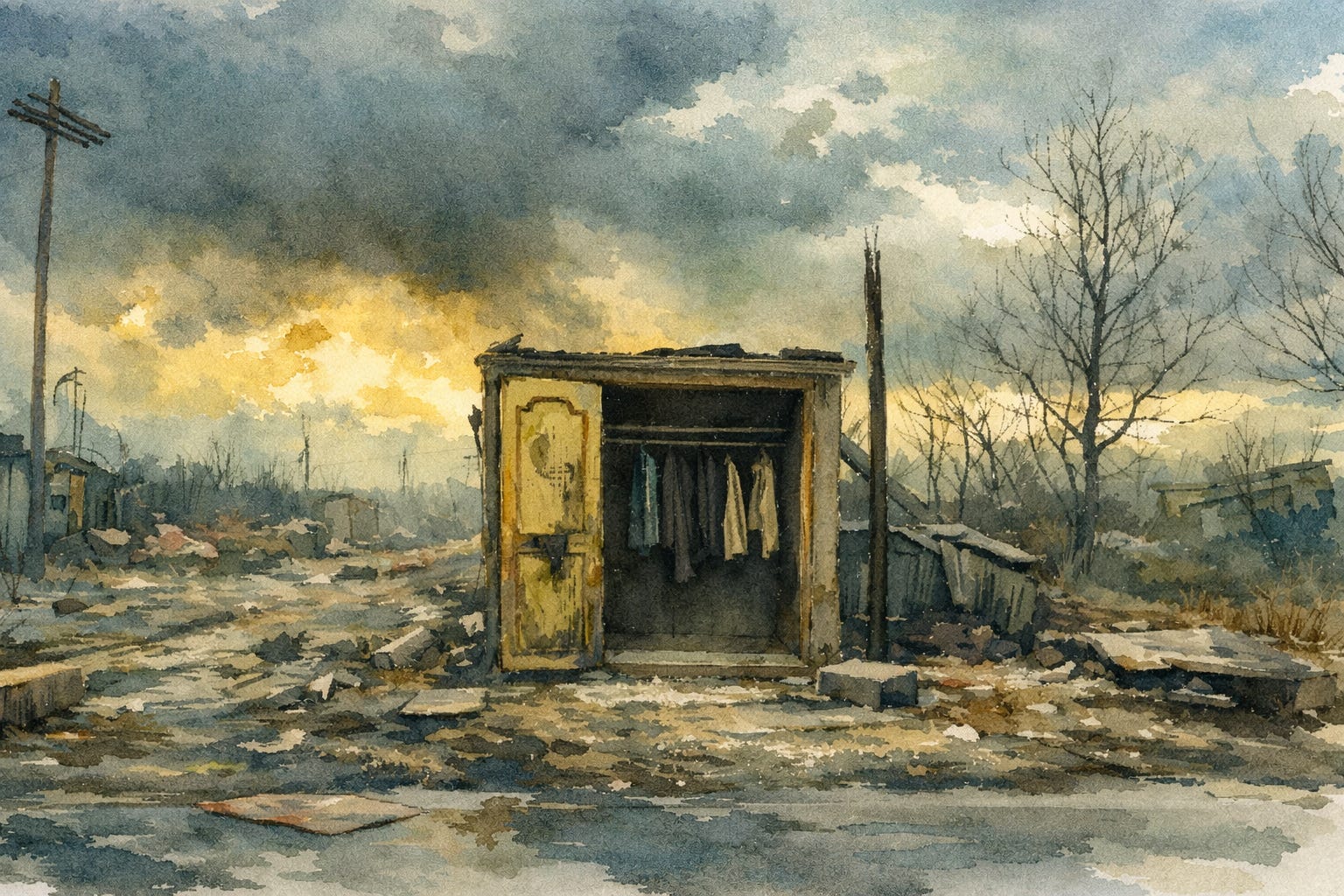
The motel had stood on a frontage road along I-94, a rundown gray building on a lot littered with broken concrete and weeds, beneath a pink neon sign with a burned-out letter that read: OTEL. I’d never paid much attention to the place, but now, as I gazed out the car window I was struck by the dilapidated cars in the parking lot covered with black soot. I noticed that there had been no grassy space around the motel, no place like the woods behind my own backyard for children to play in.
Sometimes comfort isn’t safe.
There was little left of the motel now but charred rubble. Amidst the ashes, I could see the remains of a small room still standing. Was that the closet in which Jennifer and Timothy had hid when they couldn’t find their mother? Why had they gone back into a burning building? I couldn’t make sense of it.
They’d gone back in to find comfort, but sometimes comfort isn’t safe.
I began to understand more about why we children had been so vicious to Jennifer and Timothy once I got older. We’d been whistling past the graveyard.
When I was a teen, My mom and I liked watching scary movies together. They had the potential to terrify us, but we shielded ourselves from the terror through the strategic use of sarcasm.
“Yeah, dumbass — hide behind the door! The killer will never think of looking there.”
“Yes, please keep asking ‘Hello? Is anyone there?’ Why don’t you make the murderer some tea while you’re at it?”
“Oh look, your car won’t start. What a completely unexpected plot twist!”
It’s the plot twists we’re all afraid of, isn’t it?
When I was old enough to have some perspective, I came to understand that we had made a hell of the children’s lives at school with our relentless taunting in part because, like my mother, we glimpsed the terrible possibilities their lives represented. We saw poverty and deprivation, and although we didn’t have a true sense of what those things meant, we intuitively knew we were not immune. No one was.
The very things we reach for to keep us safe can become the instruments of our undoing.
And so, we teased and tormented. We laughed and pointed because that’s what you do when things are too horrible to acknowledge.
Sometimes I think about that closet, still standing in the charred remains of a trashy motel while everything around it had burned away. Jennifer and Timothy’s refuge represents every false shelter I’ve built against my own terrors, believing the lies I’ve used to comfort myself are somehow real. I’ve forced myself to believe nothing truly terrible can happen to me, despite some terrible things that already have.
Like those children huddled in their mother’s sweaters, I keep learning, over and over, that the very things we reach for to keep us safe can become the instruments of our undoing.
I originally published this story on Medium before Donald Trump’s second term began. Now that America’s government has devolved to a fascist regime led by a monstrous dictator and his puppeteers, the idea that “sometimes comfort isn’t safe” has taken on a horrifying new meaning for me. But I’m a grown-up now. This time, I won’t be complicit.